This is the last two of the missions on mission trail in San Antonio... I just love visiting areas that date back so far and the history behind them is amazing. All of these are over 250 years old and in such great shape. I hope you enjoyed them as much as I did and I wish for you to be able to visit them one day.
San Juan Capistrano ~ San Juan (1731)
 Originally founded in 1716 in eastern Texas, Mission San Juan was transferred in 1731 to its present location. In 1756, the stone church, a friary, and a granary were completed. A larger church was begun, but was abandoned when half complete, the result of population decline. San Juan was a self-sustaining community. Within the compound, Indian artisans produced iron tools, cloth, and prepared hides. Orchards and gardens outside the walls provided melons, pumpkins, grapes, and peppers.


Beyond the mission complex Indian farmers cultivated maize (corn), beans, squash, sweet potatoes, and sugar cane in irrigated fields. Over 20 miles southeast of Mission San Juan was Rancho de Pataguilla, which, in 1762, reported 3,500 sheep and nearly as many cattle. These products helped support not only the San Antonio missions, but also the local settlements and presidial garrisons in the area. By the mid 1700s, San Juan, with its rich farm and pasturelands, was a regional supplier of agricultural produce. With its surplus, San Juan established a trade network stretching east to Louisiana and south to Coahuila, Mexico. This thriving economy helped the mission to survive epidemics and Indian attacks in its final years.

 The original indigenous people and other inhabitants from the mission are buried here in what was suppost to be the new church. Enlarge the information photo to read about all about them.

Mission San Francisco de la Espada ~ Espada (1731)
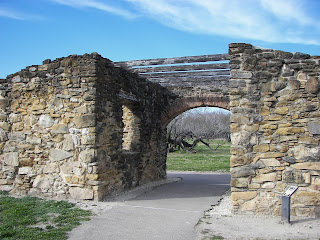
After 250 years, Mission Espada remarkably retains its unique features and solitary character ~ keepsakes from the mid 1700s. Originally named San Francisco de los Tejas, Espada was renamed and relocated to San Antonio in 1731. It is the southernmost of the 5 missions located on the San Antonio River. Mission Espada features a very attractive chapel, along with an unusual door and stone entrance archway. Mission Espada appears as remote today as it did in the mid 1700s.




It boasts the best preserved segments of the historic acequias (the irrigation system designed to provide water for crops), part of which includes the still working Espada Dam and Aqueduct. The Espada Aqueduct, which carries water from the San Antonio River across Piedras Creek, continues to feed the original mission irrigation system. Espada Dam, built between 1731 and 1740, is the best existing example of the four Franciscan-designed dams and is still in use today. Combined, these structures represent perhaps the best surviving physical assembly of an 18th century Spanish irrigation network in the United States.
When leaving the Espada Dam and Aqueduct we noticed in a field these people made of bales of hay... They were so neat I had to take some pictures and share them with you! It is incredible the talent that some people have...


Did You Know?
That the Spanish cornered the market on cochineal, a bug that produces a vivid red color, early in the Spanish colonial period? British officer coats, with which every American school child is familiar, were dyed using cochineal.
Until Later... Have FUN, Travel Safe & Enjoy Everyday!